
Not all marketing success initially looks like success. When McDonald’s CEO Chris Kempczewski posted a promotional video for the company’s new Big Arch burger, it went viral but for all the wrong reasons [1]. It was mocked across social media for the stiff delivery, the unnatural corporate language, and the comically small bite. By every traditional measure, it was a marketing failure. However, sales for the Big Arch came in above expectations, Kempczewski’s Instagram following jumped 30%, and the video racked up over 157,000 likes [2]. In an era where consumer attention is the hardest resource a brand can compete for, McDonald’s accidentally stumbled onto a gold mine: sometimes bad marketing is the best marketing.
What Happened
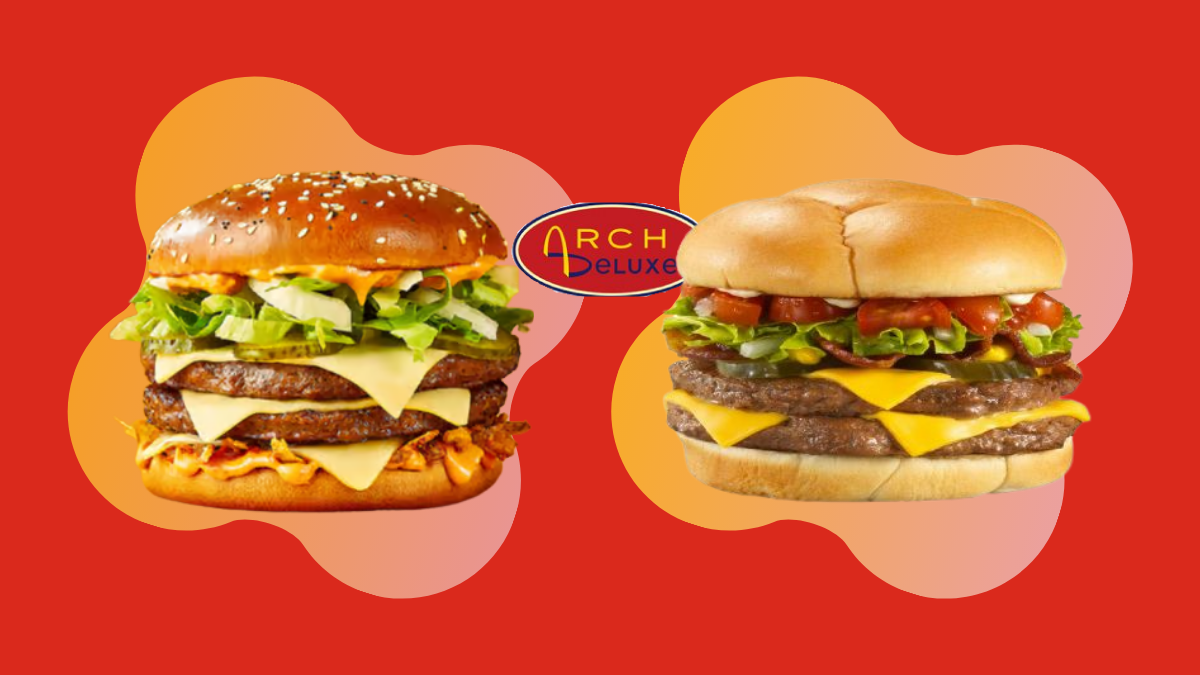
The launch of the Big Arch, which is McDonald’s first major new permanent menu item in decades, was meant to be a milestone moment for the brand [4]. To mark the occasion, CEO Chris Kempczewski took to social media with a promotional video designed to generate buzz. Instead, it generated something else entirely. The video, which featured Kempczewski referring to the burger as a “product” and taking a small, hesitant bite, quickly became the subject of mockery [3]. Social media users suggested the CEO did not look like someone who genuinely enjoyed his own product [5]. What was initially intended as authentic visibility was seen, by millions of viewers, as the opposite.
Competitors were quick to respond. Burger King CEO Tom Curtis posted a TikTok of himself taking a confident, oversized bite of a Whopper, a deliberate and pointed contrast to Kempczewski [4]. Wendy’s followed with their own U.S. president doing the same [3]. In a few days, a single awkward video had shifted from a McDonald’s PR problem into an industry-wide conversation about authenticity, leadership, and what it actually means to believe in your brand. The lesson worth discussing is whether McDonald’s delivered something more powerful than any planned campaign could have.
The Strategy
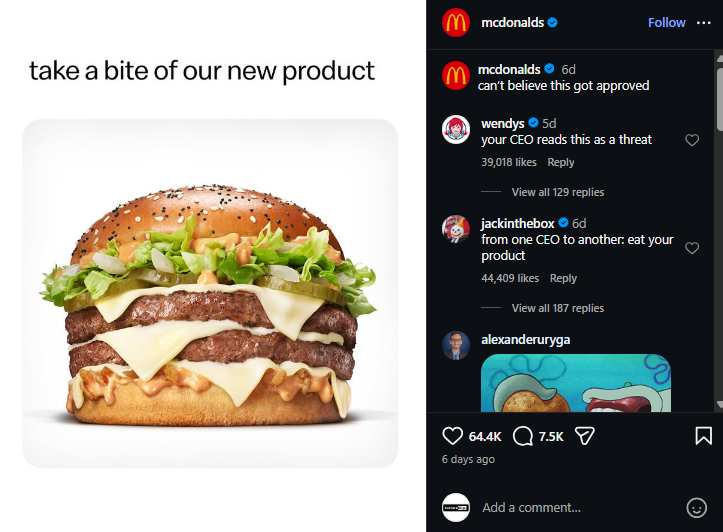
McDonald’s response to the chaos it accidentally created is worth learning from. Rather than taking down the video or issuing a correction, the brand allowed the conversation to grow and eventually leaned into it. By posting a self-aware Instagram post acknowledging the mockery without apologizing for it, they signaled a deliberate shift from being the passive subject of a joke to an active participant in the joke [2]. For a brand the size of McDonald’s, that kind of agility is not easy, and it should not be ignored.
What the moment really exposed is one of the most persistent challenges in modern marketing: getting noticed. Brands invest significant resources into promotional content designed to move consumers from awareness through to purchase, yet most of it is forgotten. The authenticity dimension adds another layer worth considering. Brand equity is built over time through consistency, trust, and a recognizable identity. What made the video so compelling to audiences was precisely its lack of curation. It was a real person, at a real desk, taking a very cautious bite of a very large burger. In a media landscape full of scripted moments, the awkwardness was seen as accidental honesty. What the McDonald’s case demonstrates is that when scripted authenticity fails, consumers notice.
Branding Implications
The results of the Big Arch moment are difficult to dismiss. Sales came in above expectations, Kempczewski’s Instagram following grew by 30%, and the original video accumulated over 157,000 likes [5]. For a brand that had been struggling to reconnect with value-conscious consumers, the timing could not have been better. What makes this particularly interesting from a branding perspective is where the growth happened. A CEO’s personal social media following is not a traditional brand equity metric, yet the spike in Kempczewski’s following reflects something real that consumers were not just engaging with the product, they were engaging with the person behind it [6]. That kind of connection, when it works, creates a layer of brand equity that advertising alone struggles to build. Despite the widespread mockery, McDonald’s core brand identity remained intact. That resilience speaks to the strength of a brand that has spent decades building recognition and trust.
The Risks
The McDonald’s moment was undeniably effective, but it would be a mistake to treat it as a playbook without acknowledging its limitations. The first and most obvious risk is shelf life. Virality built on mockery moves fast and fades faster. The same social media cycle that amplified the Big Arch video will move on to the next moment within days, and there is no guarantee that the sales momentum generated by a viral meme translates into lasting consumer behavior [2]. Attention and loyalty are not the same thing. The competitive response adds another risk worth considering. Burger King and Wendy’s did not need to spend anything to insert themselves into a conversation that McDonald’s had started [3]. By simply posting their own presidents eating their own products with noticeably more enthusiasm, they redirected part of the narrative, implying, without saying it directly, that their leadership actually believed in their product. In the attention economy, being the subject of a moment does not mean owning it. Competitors with fast social media teams and a willingness to be reactive can extract value from another brand’s viral moment just as easily as the brand itself. McDonald’s started the conversation, but it did not get to control where it went.
Key Takeaways
The McDonald’s Big Arch case does not fit neatly into any traditional marketing lesson. There was no brilliant creative idea, no carefully timed campaign rollout, no influencer strategy. There was a CEO, a desk, and a very small bite [2]. What followed was millions of impressions, above-expectation sales, and a product launch that became one of the most talked-about brand moments of the year, not because it was good, but because it was real. In an environment where consumers are increasingly resistant to polished, performative brand communication, moments that feel unscripted carry an enormous amount of weight. Authenticity creates connection in a way that manufactured content rarely does. The brands that navigated this moment best were the ones that responded like humans rather than institutions.
The deeper question the case raises is one that the marketing industry has not yet fully answered. As consumers become more sophisticated and more skeptical, is there still a place for traditional promotional strategy or are we entering an era where the most powerful marketing is the kind that does not look like marketing at all? McDonald’s did not plan to go viral for a cautious bite. However in doing so, it may have accidentally shown the rest of the industry something important about where attention is actually going.
Discussion Questions
- McDonald’s never planned for this moment, does that make it a marketing success or just a lucky accident?
- Burger King and Wendy’s inserted themselves into a conversation McDonald’s started, at zero cost. What does that tell us about who really won this moment?
- The Big Arch got attention, but attention and loyalty are not the same thing. How would you measure whether this moment actually built long-term value for McDonald’s?
By Isabella Otero
Sources
[1]https://www.theatlantic.com/culture/2026/03/mcdonalds-ceo-burger-video-backlash/686246/
[2]https://www.washingtonpost.com/opinions/2026/03/15/mcdonalds-ceo-advertising-attention-economy/
[6]https://www.nytimes.com/2026/03/05/business/mcdonalds-ceo-big-arch-burger-video.html
 Marketing Management