

Are you curious about AI? What exactly are the latest Generative AI features and platforms? Ever since ChatGPT’s launch, the artificial intelligence conversations have skyrocketed and become much more tangible, alongside the race to have the best and most profitable AI technology. Now, Google, Microsoft, and other big tech companies have their own AI software available, designed to improve business practices. It also raises ethical questions surrounding copyright infringement and plagiarism. What does all this mean for the future of marketing?
Earlier this year, we discussed ChatGPT and the general implications of AI in marketing. If you’re interested in our ChatGPT blog, click here. Since then, there have been some changes.

“Across industries, engagement models are changing: today’s customers want everything, everywhere, and all the time.” 1
Marketing is an ever changing field and requires constant learning and adaptation to stay relevant and profitable. Google has always been a brand at the forefront of technological innovation. It’s hard to believe they only just celebrated their 25th anniversary this year. 2 Let’s look at Google to see how they are tackling AI and bringing the newest technologies into everyday practices.
Google recently launched AI and machine learning products on Google Cloud. Software services are available for companies interested in using these AI technologies for creative generation, customized business solutions, data analysis, forecasting, and more – everything from summarizing documents and translating texts to interpreting image & video content and real-time coding recommendations. 3
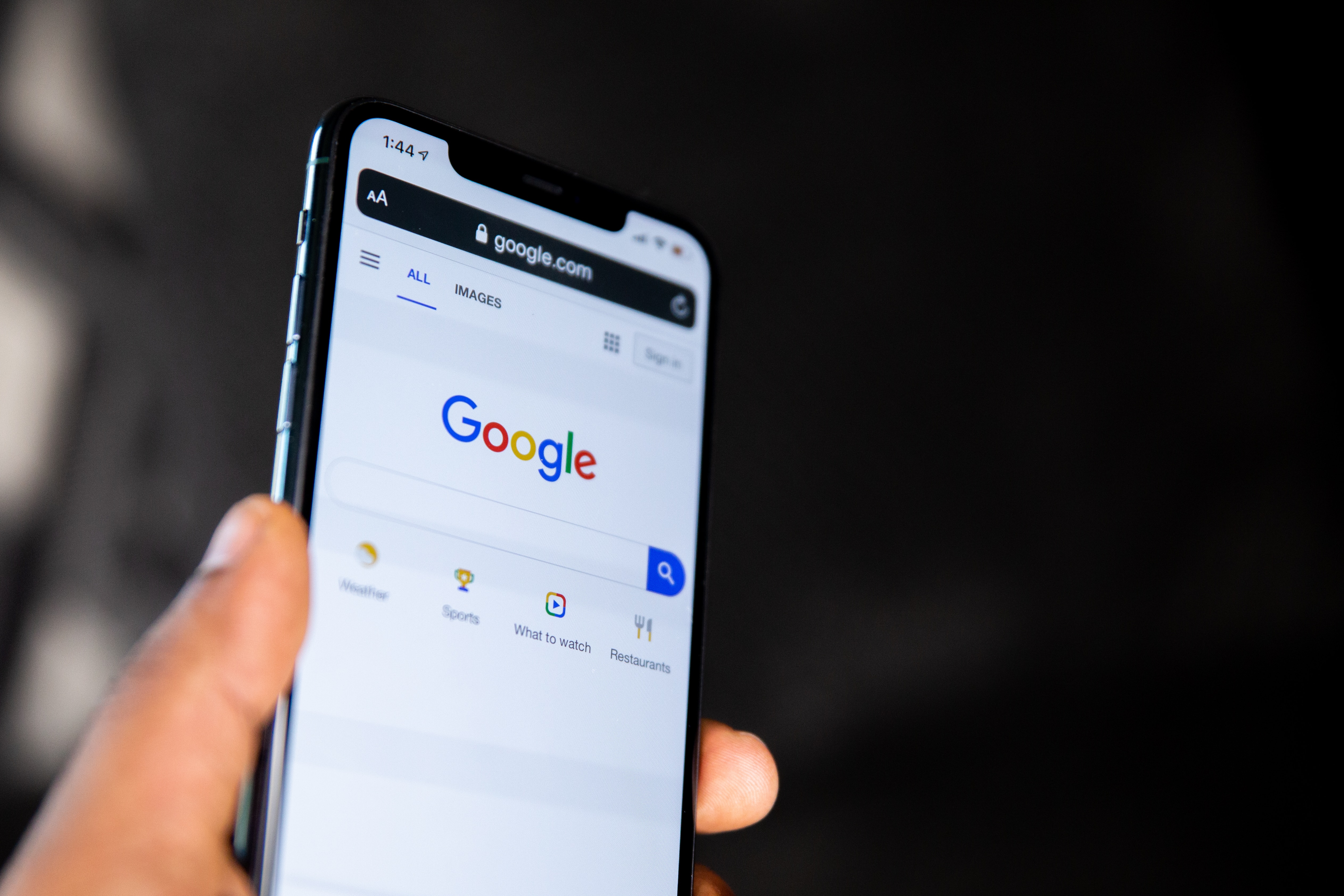
Google’s latest release is a new feature on their search engine results page (SERP). This Search Generative Experience is a form of deep learning artificial intelligence that generates new data based on training code, data, and models to predict patterns and create content. Similar to ChatGPT, results are dependent on prompt design. As these AI technologies become more prevalent, learning to craft the best possible prompts and queries will be the most effective way to utilize it. Currently, the feature is only available on certain devices and browsers in the U.S. as Google works through testing and improving the Search Generative Experience before making it available to the general public. 4
It can produce natural language, image, and audio, but it will not generate numbers, discrete, class, or probability data. For example, it will provide answers to searches for queries like “What are the best hotels in Orlando?” or “What are the best activities in Tampa for a family of 4?” but not “What is 2+2?”. Google’s Generative AI is designed to reason, learn, and act autonomously like humans, so it can learn from patterns and pattern-matching systems to develop new content. Because of this, you can ask follow-up questions based on your original prompt. 5
For both paid and organic marketing on Google, this AI feature changes a few things. First, paid ads, or the “Sponsored Content” you see at the very top of search results, will still populate first. In the image below, you can see the paid ad for Nike’s website at the top of the results, followed by the Generative AI results. Organic results, however, will show up below Generative AI results.

For Search Engine Optimization (SEO), this means some websites will likely start seeing decreasing traffic such as clicks and impressions as a result of reduced SERP visibility. To rank better organically, Google still looks for and ranks sites higher with more experience, expertise, authoritativeness, and trustworthiness. 6 The purpose of Google’s Generative AI and other AI technologies is to provide the best content possible with a people-first content focus. 7 This means factors like high-quality and focused content, long-tail keywords designed for voice-specific search patterns and conversational language, structured content that makes it easier for AI to crawl sites for content, and relevant images and video to compliment website content. 8 All of these influence how Google crawls and ranks websites for organic traffic.
But where does AI get its information?
“AI systems are ‘trained’ to create literary, visual, and other artistic works by exposing the program to large amounts of data, which may include text, images, and other works downloaded from the internet. This training process involves making digital copies of existing works.” 9
AI and machine learning have to be trained with existing sets of data, so they have a base to derive content from. 10 In the same way that students go to class to study existing materials to learn, AI has to be given data for it to process and “learn” in order to develop its own content.
Interestingly, the U.S. Copyright Office defines copyright as “Works are original when they are independently created by a human author and have a minimal degree of creativity. Independent creation simply means that you create it yourself, without copying.” 11 By this definition, content produced by generative AI is not considered copyrighted information because it is technically not human. In the future, this may change.
Content creation in marketing will certainly see some impacts from generative AI. Influencer marketing is heavily dependent on creativity – crafting original content and individualizing trends. This growing creator economy can benefit from these technologies: it “has the potential to decrease costs, increase speed to market, expand reach, and enable greater personalization.” 12
Generative AI will force marketers to redefine strategies in content creation. While it has great potential with increased speed and quantity of content, it requires marketers to rethink creative processes and learn how to incorporate fast-changing technologies into business practices ethically and efficiently. 13 The biggest areas thus far that generative AI can help in marketing is through content creation and ideation, as well as competitor and market assessments and optimization strategies.
Questions marketing manager would consider:
- How would you utilize generative AI in marketing? How might you adjust your processes to incorporate these technologies into every day practice?
- What are the benefits and drawbacks of generative AI?
- What kind of marketing roles do you think generative AI and other machine learning technologies might replace?
References
1 Deveau, R., Griffin, S.J., & Reis, S. (11 May 2023). AI-powered marketing and sales reach new heights with generative AI. McKinsey & Company. https://www.mckinsey.com/capabilities/growth-marketing-and-sales/our-insights/ai-powered-marketing-and-sales-reach-new-heights-with-generative-ai?cid=mckexprec-pse-gaw-mss&gad_source=1&gclid=CjwKCAjwnOipBhBQEiwACyGLumNfkTyM2Vipx8KI2DAvM9EY1JEjgm_Djva9uK_1eOat1UvK9XATjxoCG1sQAvD_BwE
2 Google. (2023). About Google. https://about.google/
3 Google Cloud. (2023). AI and machine learning products. Google. https://cloud.google.com/products/ai?hl=en
4 Reid, E. (10 May 2023). Supercharging Search with generative AI. Google. https://blog.google/products/search/generative-ai-search/
5 Reid, E. (10 May 2023). Supercharging Search with generative AI. Google. https://blog.google/products/search/generative-ai-search/
6 Handley, R. (27 April 2023). What Are E-E-A-T and YMYL in SEO & How to Optimize for Them. Semrush. https://www.semrush.com/blog/eat-and-ymyl-new-google-search-guidelines-acronyms-of-quality-content/?kw=&cmp=US_SRCH_DSA_Blog_EN&label=dsa_pagefeed&Network=g&Device=c&utm_content=669334805644&kwid=dsa-2147915045507&cmpid=18348486859&agpid=155292014834&BU=Core&extid=91683637807&adpos=&gad=1&gclid=CjwKCAjwgZCoBhBnEiwAz35RwjzkotxHiKP0Q6Wr-ZvhlffHicvwEORw7p0ol6-yRkaZPVnmCc4nBBoC5ywQAvD_BwE
7 Reid, E. (10 May 2023). Supercharging Search with generative AI. Google. https://blog.google/products/search/generative-ai-search/
8 Vision Raval. (15 July 2023). How to optimize your website for Generative AI based search result. LinkedIn. https://www.linkedin.com/pulse/how-optimize-your-website-generative-ai-based-search-result-raval/
9 Zirpoli, C.T. (29 September 2023). Generative Artificial Intelligence and Copyright Law. Congressional Research Service. https://crsreports.congress.gov/product/pdf/LSB/LSB10922#:~:text=Generative%20AI%20also%20raises%20questions,that%20resemble%20those%20existing%20works
10 Zirpoli, C.T. (29 September 2023). Generative Artificial Intelligence and Copyright Law. Congressional Research Service. https://crsreports.congress.gov/product/pdf/LSB/LSB10922#:~:text=Generative%20AI%20also%20raises%20questions,that%20resemble%20those%20existing%20works
11 U.S. Copyright Office. (n.d.) What is Copyright? copyright.gov. https://www.copyright.gov/what-is-copyright/#:~:text=Copyright%20is%20originality%20and%20fixation&text=Works%20are%20original%20when%20they,create%20it%20yourself%2C%20without%20copying
12 Ortiz, D., Spillman, G., & Said, M. (26 September 2023). How Will Generative AI Reshape the Creator Economy? The Wall Street Journal; Content by Deloitte. https://deloitte.wsj.com/cmo/how-will-generative-ai-reshape-the-creator-economy-f30d8575?cx_testId=51&cx_testVariant=cx_5&cx_artPos=2&mod=Deloitte_cmo_Trending_wsjarticle_3#cxrecs_s
13 Ortiz, D., Spillman, G., & Said, M. (26 September 2023). How Will Generative AI Reshape the Creator Economy? The Wall Street Journal; Content by Deloitte. https://deloitte.wsj.com/cmo/how-will-generative-ai-reshape-the-creator-economy-f30d8575?cx_testId=51&cx_testVariant=cx_5&cx_artPos=2&mod=Deloitte_cmo_Trending_wsjarticle_3#cxrecs_s
 Marketing Management