
Do you remember any Super Bowl advertisements? Maybe the Coinbase ad that had the whole family singing “Everybody” by the Backstreet Boys, or maybe the unsettling moment Claude warned us that ads were coming to AI [1]. Some of you might remember Lady Gaga singing a Mr. Rogers song for Rocket Mortgage, or Adrien Brody dramatically preparing to play a tax preparer for TurboTax [1]. However if you are being honest, there are probably 10 or 15 other ads that you could not name if someone paid you. Yet brands paid somewhere between $8 and $10 million dollars for a single 30-second spot which marks some of the most expensive advertising real estate in the world, and most of it was forgotten the next day [15]. At its core this is a marketing problem. Understanding why some ads survive in your memory while others disappear the moment the next one starts is one of the most useful things a marketer can study. The same principles that made one ad impossible to forget and another completely forgetful apply to every email, every social media post, and every campaign at any budget level. With 125.6 million viewers across NBC, Peacock, and Telemundo, Super Bowl LX was effectively the world’s largest and most expensive marketing case-study [16]. The difference between the ads you still remember and the ones you do not was not budget, amount of movie stars involved, or production value. It came down to three things, and once you learn them, you will start noticing them everywhere.
Successes
Some ads from the Super Bowl continue to be talked about, studied in classes, and live rent-free in our heads. Whether they were shared on social media, referenced in conversations, or used as successful examples, there is a clear distinction between them and the ones that no one can seem to remember. When you look at what they had in common, the pattern becomes clear fast.
Google Gemini’s “New Home” ad is one of the most talked about of the night [1]. It showed a mom and young son using the Gemini app to picture what their new house would look like including things like a new garden, different colored walls, a redecorated bedroom. It was warm, simple, and specific. What made it work was that it did two things at once: it showed you exactly what the product does while also genuinely making you feel something. That combination of emotional resonance and product clarity is harder to pull off than it looks, and Google mastered it on the biggest stage in advertising.
TurboTax and Adrien Brody took a completely different route: humor [1]. Brody played a tax preparer preparing for his role with over-the-top dramatic intensity, exclaiming “I just want to tap into the pain of taxes,” mimicking the trope of mob boss that he has played in the past. Meanwhile a TurboTax expert calmly reminded him that Turnbotax takes the pain out of taxes entirely. The message never got lost in the comedy. Celebrity, humor, and a crystal clear product message showed how consumers walked away knowing exactly what TurboTax does and why they might want it.
Rocket Mortgage and Lady Gaga went the emotional route entirely [1]. The ad featured Lady Gaga singing Mr. Rogers’ “Won’t You Be My Neighbor” was rated one of the most emotionally engaging Super Bowl ads in more than five years [1]. In a year when audiences were craving warmth and community, Rocket Mortgage tapped directly into what people were already feeling and made their brand synonymous with it. The tagline “America could use a neighbor” tapped into the consumers’ emotional connection using Pathos to leave a lasting mark.
Anthropic’s Claude stood out with a very different approach [1]. In Anthropic’s first ever Super Bowl commercial, the ad opened on a familiar scene, someone asking an AI chatbot for help connecting with their mother. As the AI begins giving him advice on how to foster a deeper connection with his mother, it then offers to create a profile for a dating site for cougars while promoting its use, leaving him utterly perplexed. “Ads are coming to AI,” the screen reads. “But not to Claude.” In a year crowded with AI companies, Anthropic leaned directly into what made them different rather than following the crowd. You knew immediately what the product was and exactly why someone should choose it, which is more than most ads that night could claim.
Fanatics Sportsbook’s ad featuring Kendall Jenner leaned directly into cultural timing [1]. The commercial played off the long-running internet joke known as the “Kardashian curse,” the idea that athletes mysteriously underperform when romantically linked to a Kardashian. In the ad, Jenner is seen living her lavish lifestyle while jokingly implying that her wealth comes from betting against her ex-boyfriends through Fanatics. She even alluded to potentially dating a football player to gain an edge on her bets, a notable departure from her well-known history of dating basketball players, and a clever nod to the ad’s Super Bowl timing. It was self-aware, funny, and most importantly, perfectly aligned with the unpredictability that makes sports betting appealing in the first place. The joke did not distract from the product rather it reinforced it. Viewers remembered both the cultural reference and the brand. That is strategic humor.
Failures
The failures are just as teachable as the successes and sometimes even more so. Because the brands that missed did not miss for lack of budget or creativity. They missed for very specific, very avoidable reasons.
Coinbase is the clearest example and the most ironic, given that it opened this article as one of the ads you might actually remember [1]. However here is the thing: you probably remember the Backstreet Boys. You probably remember the singalong. What you might not remember is what Coinbase actually does or why you would ever use it which is the problem. The ad was entertaining enough to stick in your memory as a fun moment, but it failed to attach that fun to any meaningful product message. Coinbase spent up to $10 million to put a smile on your face and left nothing else behind [15].
ai.com made the same mistake in a different way [1]. The ad leaned heavily on intrigue and obscurity using a sleek, mysterious tone that felt designed to make you feel like you were watching something important. But by the end of it, most viewers had no clear idea what the product actually did or why they would want it. Novelty is not a message. Looking impressive is not the same as being useful. When your plan is to ask someone to change their behavior or try something new, confusion is the enemy.
Dunkin’ Donuts tried to recapture past success and fell short [1]. After years of viral success with Ben Affleck and Matt Damon, including the iconic orange suit ad with Jennifer Lopez and Tom Brady, Dunkin’ went bigger by recruiting Jennifer Aniston, Jaleel White, Jason Alexander, Alfonso Ribeiro, and Matt LeBlanc for a Good Will Hunting parody reimagined as a 90s sitcom reunion [1]. The nostalgic ad was crowded and chaotic. With so many familiar faces competing for attention, none of them ended up doing the actual work of selling the product. It proved a valuable lesson: more celebrities does not mean more impact. In fact, too many stars in one room can dilute the message entirely.
Kellogg’s Raisin Bran and William Shatner showcased a different type of failure [1]. The brand used one of the most legendary actors in pop culture history to tell 125 million people, mid-game, to try their fiber-rich cereal [16]. For most Americans, this commercial fell short on appeal. It is true that the U.S. on average experiences a lack of fiber intake; however, the Super Bowl may not be the place to advertise it. While football fans are snacking on buffalo chicken dip and chicken wings, they are hardly rushing to buy fiber cereal the next day. Knowing your audience is not just about knowing who they are. It is about knowing what they are doing and how they are feeling when your message reaches them.
The Formula For Success
Looking across every ad that worked, three things show up every single time. Furthermore, their absence explains every ad that wasn’t memorable.
Clarity
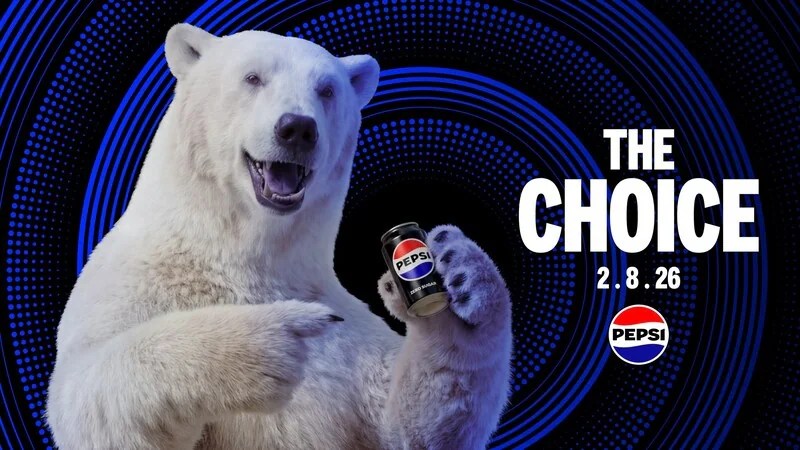
You knew exactly what was being sold within the first few seconds. Google showed you what Gemini does [1]. TurboTax told you what it solves [1]. Anthropic’s Claude told you what made it different from every other AI product on the market [1]. The brands that failed, like Coinbase and ai.com, left audiences confused. [1]. The hard truth about Super Bowl ads is audiences will not work even 1% harder to try to understand what they are watching. They will not look up the meaning of the ad afterward. If they do not immediately get it, they do not get it. At $8 to $10 million for 30 seconds, confusion is not a creative choice [15]. It is a strategy failure. The Pepsi vs. Coca-Cola polar bear ad captured this perfectly. Even without a single word, you instantly understood the rivalry, the positioning, and the message Pepsi was selling [11].
Emotion or humor: but never at the expense of the message.
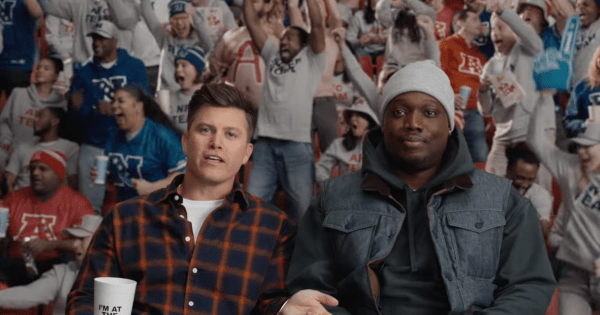
Every successful ad made you feel something, but none of them let that feeling overshadow the product. Fanatics Sportsbook made you laugh and still landed its message cleanly [1]. Google Gemini made you tear up and still told you exactly what it stood for [1]. Lady Gaga singing Mr. Rogers was genuinely moving, and you still knew it was a mortgage company [1]. The failures here used humor or nostalgia as a substitute for a message rather than a catalyst for one. Dunkin’ Donuts gave you five beloved celebrities and a nostalgia trip and somehow still said nothing about coffee [1]. The SNL Weekend Update-style ad with Colin Jost and Michael Che for Draft Kings was an example of success because the humor never replaced the message. The joke was the vehicle, but the product remained the reason the joke exists [12].
Relevance
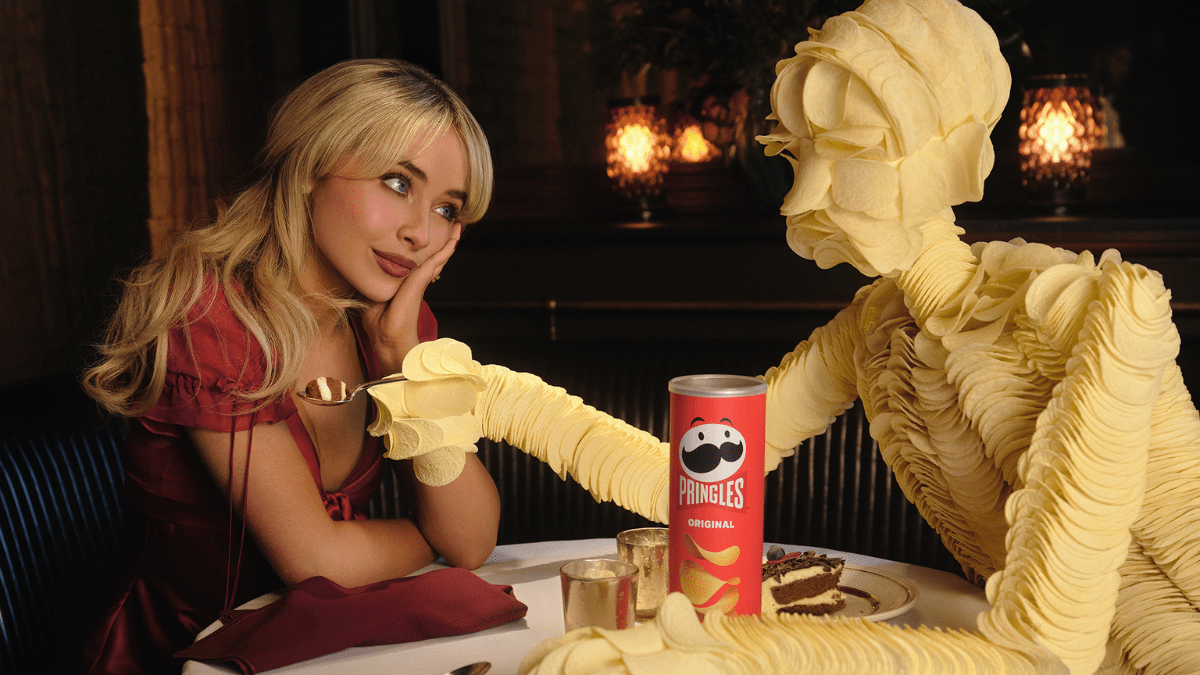
The best ads met the audience where they already were: culturally, emotionally, and contextually. Relevance now looks different than it did even a few years ago. Audiences are not just responding to emotion, they are also responding to cultural relatableness. Brands that understood what people were talking about, listening to, and paying attention to right now had a massive advantage. Rocket read the emotional room [1]. Turbotax read the cultural room [1]. Anthropic read the technological room and positioned itself against growing discomfort with AI advertising in real time [1]. The brands that ignored the moment like Raisin Bran, Dunkin’ Donuts paid for it in being forgettable [1]. Sabrina Carpenter alongside the Pringles Man is a perfect example of relevance done right [13]. Sabrina is not just a celebrity, she is one of the defining pop figures right now, and the Pringles Man himself has become an internet personality through memes and social media. Pairing the two did more than create a funny visual, it placed the brand directly inside the current cultural conversation. In a time defined by fast-moving trends and short attention spans, the ads that succeeded were not just well-produced. They were culturally present.
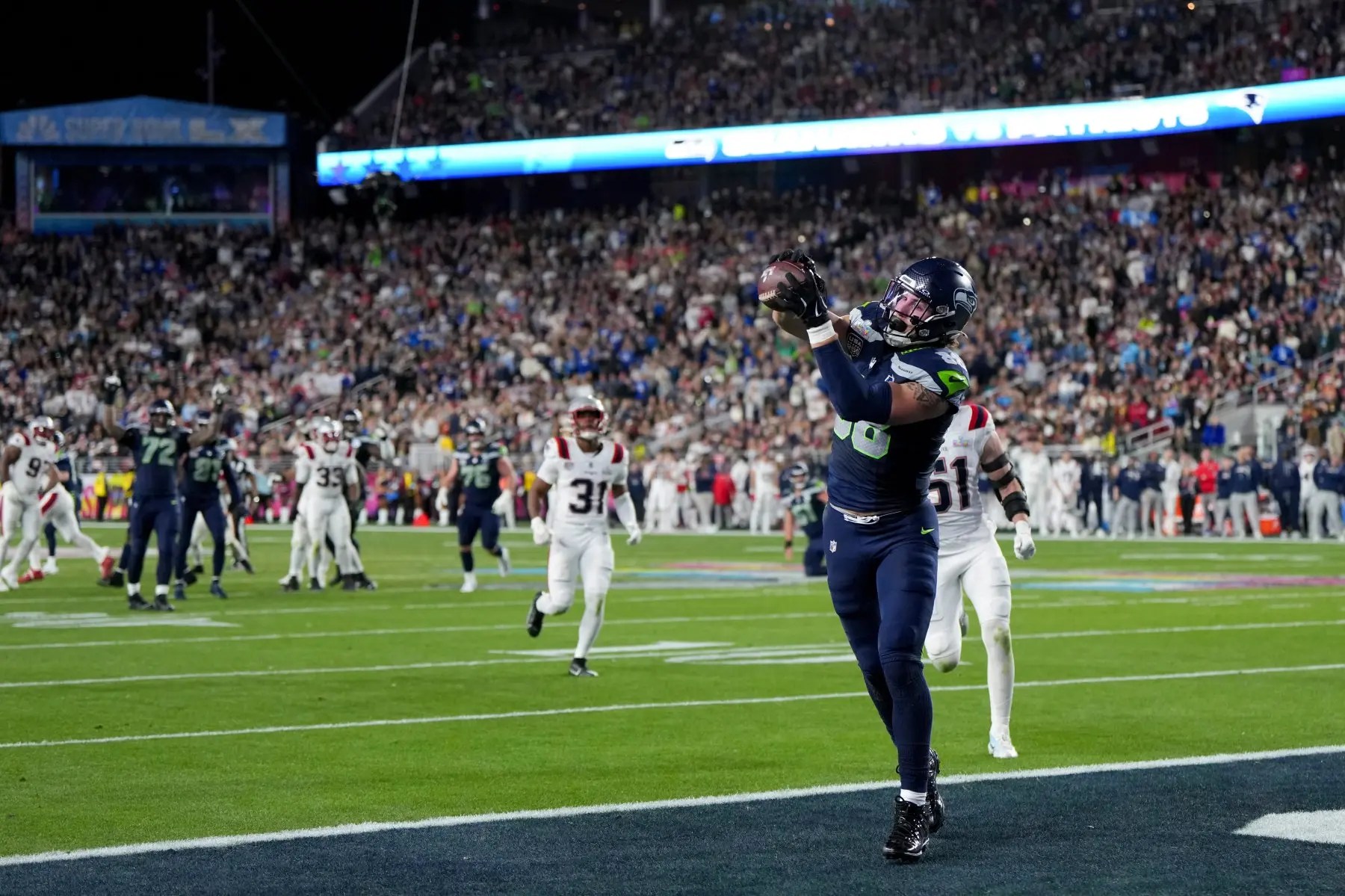
The formula across all three is simple: the best ads knew exactly what they wanted to say, made you feel something real while saying it, and said it at exactly the right moment. None of that requires a $10 million budget [15]. However, all of it requires a clear strategy.
Managerial Connection
A marketing budget does not need to be $10 million for these lessons to apply [15]. Every email subject line, every social post, every product launch, every campaign faces the exact same challenge as a Super Bowl ad: a few seconds to earn someone’s attention, and a single clear memorable message to leave behind. The Super Bowl just makes the stakes impossible to ignore.
Think about Coinbase [1]. They had the budget, the audience, a Backstreet Boys song, and a room full of people ready to be won over. What they did not have was a clear answer to the most basic question in marketing: why should someone choose you? This basic marketing concept does not get easier with a bigger budget. If anything it gets harder, because the pressure to be entertaining starts to win over the pressure to have a clear message. Google answered it with a mom, her son, and a house full of possibilities demonstrating that it is not a production budget difference [1]. It is a strategy difference. The same applies to relevance. Raisin Bran had William Shatner, a huge star, and still managed to miss the room entirely [1]. Relevance is not about who is in your ad or how much you spent on it, it is about understanding your audience deeply enough to know what they need to hear, when they need to hear it, and how they need to feel when they hear it. The brands people continue to talk about were not necessarily the ones with the biggest budgets or the most famous faces. They were the ones that were clear, made people feel something genuine, and understood the moment they were marketing into.
So the next time you are writing an email, planning a campaign, or launching something new, ask yourself the same three questions every successful Super Bowl ad answered: Do people know exactly what I am selling? Does this make them feel something real? And is this the right message for this exact moment? If you can answer yes to all three, you are already ahead of half the brands that spent $10 million on their Super Bowl ad [15].
Questions to consider:
- What Super Bowl ad do you remember most, and what made it memorable?
- Did any ad entertain you but fail to explain the product clearly? What does that reveal about marketing effectiveness?
- How did humor or emotion help, or hurt, the effectiveness of an ad?
- Why was cultural relevance important for ads like Sabrina Carpenter’s Pringles commercial?
- How can you apply the three principles (clarity, emotion, relevance) to your own marketing or communication?
By Isabella Otero
Sources:
[2] New Home | Google Gemini SB Commercial 2026
[3] The Expert feat. Adrien Brody: TurboTax 2026 Super Bowl Commercial (Official TV Ad :45)
[4] America Needs Neighbors Like You l Redfin x Rocket Mortgage
[5] How can I communicate better with my mom?
[6] Bet On Kendall :90 | Fanatics Sportsbook
[8] Introducing ai.com – Your Private, Personal AI Agent
[10] Kellogg’s Raisin Bran Super Bowl Commercial 2026 Will Shatner
[11] The Choice
[12] SNL’s Colin Jost and Michael Che Are Nearly Live in DraftKings’ Super Bowl 60 Ad
[13] Sabrina Carpenter Builds the Perfect Man Out of Pringles in Her First Ever Super Bowl Ad
[14] Seattle Seahawks Beat New England Patriots to Win Super Bowl 2026
[15] How Much Does A Super Bowl Commercial Cost In 2026?[16] Super Bowl LX Delivers 125.6 Million Viewers
 Marketing Management