

Entertainment as a Global Marketing Strategy
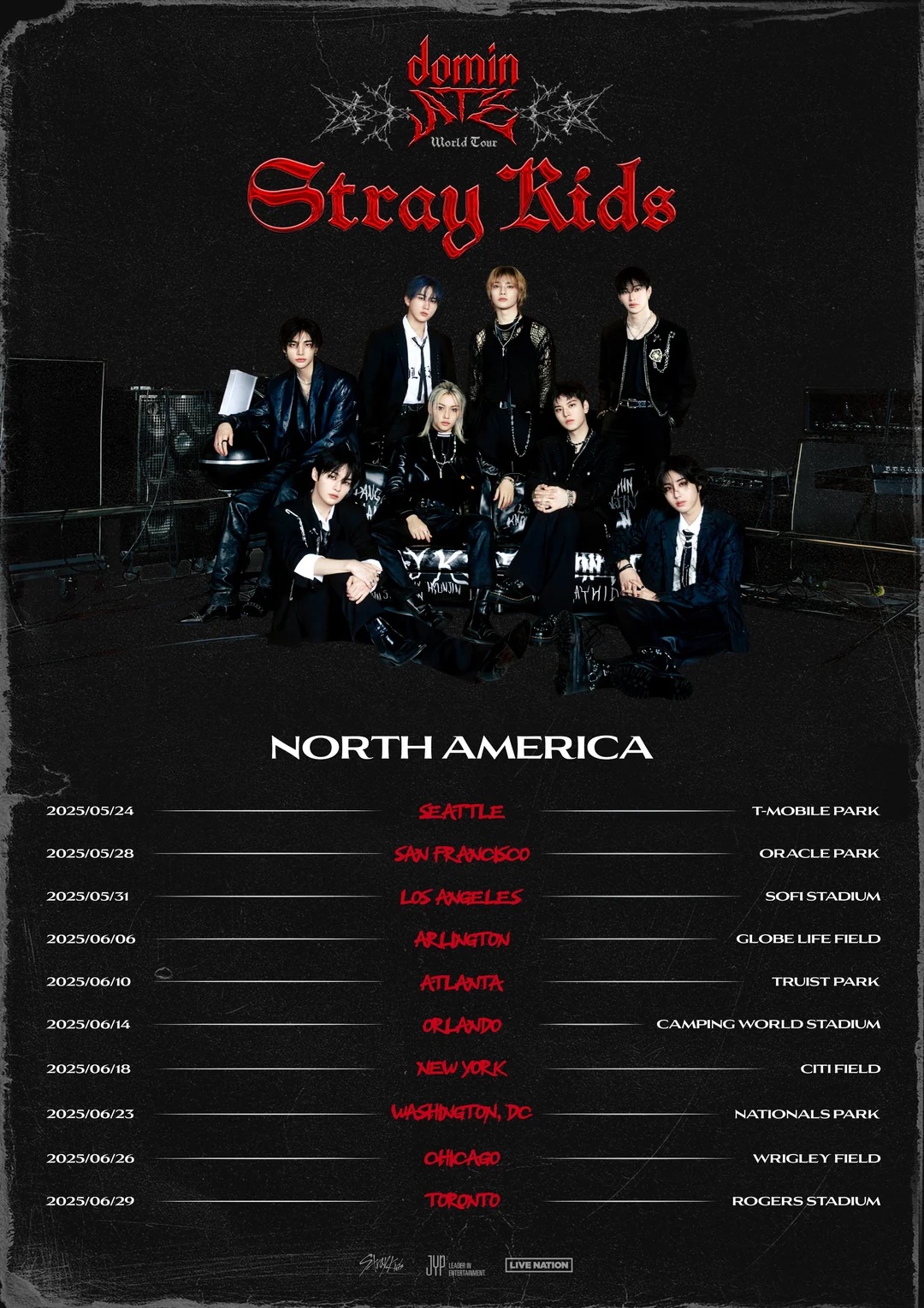
Modern marketing management focuses on value creation through integrated systems instead of isolated transactions. A strong example of global marketing is the recent Stray Kids world tour, DominATE, and the following documentary release of their world tour. Both of these entertainment factors serve as strong examples of global marketing, service strategy, and product lifecycle extension. Instead of just acting as a music group, the group functions as a globally recognized brand that leverages experiential offerings and diverse revenue streams such as music shows, music videos, digital content, and world tours, to enhance long-term customer value. From a global marketing perspective, the group has expanded beyond domestic Korean markets into developed economies like the United States and Europe, while also entering emerging markets. The country-of-origin effect also enhances brand differentiation, as Korean cultural exports convey a unique identity that shapes consumer perceptions in international markets.
Global Segmentation and International Expansion
Stray Kids’ world tour strategy reflects deliberate application of global marketing principles. The DominATE world tour began in August of 2024 and ended in October of 2025, with the tour starting and ending in Seoul, South Korea. Instead of relying on broad international exposure, the group’s management leveraged data-driven insights to identify geographic regions with sufficient demand to support large-scale concerts. The demand was confirmed through the documentary’s global theatrical release. Stray Kids: The DominATE Experience debuted at number one at the worldwide box office, earning about $19 million in its opening weekend (Rubin, 2026; D’Alessandro, 2026). The documentary’s distribution model reflects strategic licensing partnerships with theater chains across multiple countries. This entertainment data supports the argument that global marketing today is driven by analytics and validated by demand.

Product Strategy and Lifecycle Extension
Chapter 8 highlights that marketing focuses on the entire offering, not just the tangible product. In Stray Kids’ case, value creation occurs through a layered strategic approach. The core product is their album releases, and the enhanced product is the immersive concert experience. The documentary acts as a product line extension, broadening the overall product mix and extending the product life cycle (PLC). Instead of letting the concert experience end with the final show, the firm converts a perishable live event into a scalable digital asset. In the documentary, you could see behind-the-scenes footage of the world tour and gain insights from each member. Early ticket sales for the documentary exceeded $1.4 million within the first 24 hours of availability (The Hollywood Reporter, 2026). This immediate conversion reflects strong brand equity and high consumer willingness to repurchase within the same ecosystem. This strategy represents sustaining innovation, enhancing and repackaging existing brand value to extend lifecycle profitability. Additionally, by making the tour accessible to non-attendees, the firm supports the innovation diffusion process, which expanded participation to broader adopter segments. The documentary’s commercial success reinforces how product extension can meaningfully increase revenue diversification while strengthening brand continuity.
Experiential Marketing and Service Strategy
Concert tours showcase key features of services: intangibility, inseparability, variability, and perishability. Since performances cannot be stored, managing supply and demand forecasting becomes crucial. Transforming a perishable service into a film reduces perishability while maintaining emotional impact. Industry coverage highlighted that Stray Kids’ concert film led the global box office during a typically slow-release weekend (Screen Daily, 2026). This demonstrates how experiential marketing can produce measurable financial gains beyond ticket sales. Applying the service-profit chain, high-quality live experiences boost satisfaction, which improves customer retention and fosters customer advocacy. The measurable box office results confirm that advocacy leads to ongoing revenue. Additionally, immersive concerts create customer delight, surpassing baseline expectations and increasing emotional switching costs. This supports a customer-focused strategy centered on lifelong engagement rather than one-time event profitability.
Digital Communities
Digital communities, such as Instagram, YouTube, and X, further amplify the ecosystem. Media reporting highlighted the rapid surge in audience engagement and ticket demand leading into the film’s release (The Hollywood Reporter, 2026). Such engagement illustrates how global marketing themes are reinforced through digital amplification. Fans function as decentralized brand ambassadors, reducing customer acquisition costs while strengthening brand equity. The group also interacts with their fans a lot, which makes them very personable. Strong viewership confirms that digital engagement translates into tangible financial outcomes.
Strategic Implications for Marketing Managers
Stray Kids’ integrated strategy provides several managerial insights:
- Global marketing requires analytics-driven geographic segmentation and centralized brand coherence.
- Extending the product life cycle through multimedia adaptation increases long-term revenue potential.
- Experiential offerings leverage service characteristics to create emotional switching costs.
- The service-profit chain remains applicable in entertainment ecosystems where advocacy drives growth.
- Revenue diversification through cross-channel product extensions enhances financial resilience.
In contemporary marketing management, value emerges from ecosystem orchestration rather than isolated releases. Stray Kids’ world tour and documentary demonstrate how product, service, and global strategy can be integrated into a scalable marketing system.
Questions to Consider
- How does analytics-driven geographic segmentation reduce market entry risk in global entertainment marketing, and what are the potential limitations of relying heavily on demand forecasting models?
- To what extent can multimedia adaptations serve as effective product line extensions without risking brand dilution, and how should marketing managers evaluate the optimal timing for lifecycle extension?
- How does converting an experiential service into a tangible digital asset alter the traditional service characteristics (intangibility, perishability, variability), and what implications does this have for long-term customer lifetime value?
Sources
- Rubin, R. (2026, February 8). K-pop concert doc “Stray Kids” tops global box office with $19 million, “Zootopia 2” climbs to $1.8 billion. Variety. https://variety.com/2026/film/box-office/stray-kids-k-pop-concert-doc-tops-global-box-office-zootopia-2-milestone-1236656185/
- D’Alessandro, A. (2026, February 9). Box office: “Stray Kids” movie No. 1 worldwide with $19M. Deadline. https://deadline.com/2026/02/box-office-stray-kids-zootopia-2-housemaid-send-help-1236712426/
- McClintock, P. (2026, January 14). Stray Kids concert movie sells over $1.4M in ticket sales in less than 24 hours (Exclusive). The Hollywood Reporter. https://www.hollywoodreporter.com/movies/movie-news/stray-kids-concert-movie-ticket-sales-exclusive-1236474363/
- Roxborough, S. (2026, February 9). K-pop concert film Stray Kids: The Dominate Experience tops global box office in quietest weekend of the year so far. Screen Daily. https://www.screendaily.com/news/k-pop-concert-film-stray-kids-tops-global-box-office-in-quietest-weekend-of-the-year-so-far/5213560.article
 Marketing Management